A small event space can either look sharp and intentional or like someone unloaded the back of a car and hoped for the best. The difference usually comes down to planning.
An 8×8 custom tent gives businesses a compact footprint that is easy to transport, practical for smaller venues, and flexible enough for markets, pop-up promotions, community events, trade fairs, races, and sidewalk activations. Because the space is limited, though, every design choice matters more. There is less room to hide clutter, weak branding, awkward furniture, or equipment that looks tired.
That is exactly why a small-format setup can be so effective. It forces a brand to focus on one clear customer action: browse, sample, ask, book, buy, or sign up. The right layout, graphics, accessories, and quality can make eight feet by eight feet feel polished rather than cramped.
Table of Contents
Why Small Spaces Reward Better Planning
Large event booths can absorb a little inefficiency. An 8×8 footprint cannot.
A canopy 8 x 8 gives you 64 square feet, so the setup needs to be designed around how people will actually move. If a table blocks the entire entrance, customers may never step inside. If product boxes take over the rear wall, your branding disappears. If staff chairs occupy half the booth, the space starts feeling more like a break room than a marketing environment.
Professional small-format design starts with one question: what should the visitor do first? Whether the goal is browsing a featured product, speaking with a representative, or signing up, the smaller the footprint, the more important it is to give the space a single clear purpose.
Make the Canopy Carry More of the Branding
One of the smartest ways to conserve floor space is to make the structure itself do the visual work.
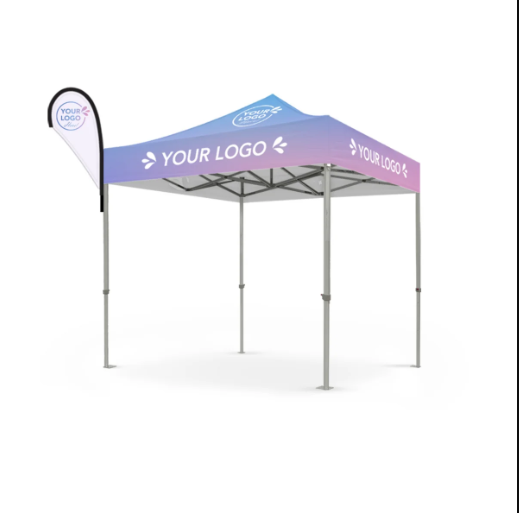
A printed 8×8 custom tent can carry your logo, company colors, short messaging, and visual identity on the roof, valances, and walls. That means you do not need to fill the booth with freestanding signs just to explain who you are.
The roof should handle recognition from farther away. Large logos and strong brand colors work well here. The valance can carry a short tagline, web address, or concise description of what you offer. A rear wall can support photography, a service message, or a hero product image.
The goal is not to cover every inch with print. Small booths benefit from visual breathing room, and one strong logo is more useful than five smaller ones fighting for attention.
A Specialty Tea Brand Cleans Up Its Market Presence
Imagine a specialty tea company attending weekend markets. Its original setup includes a plain tent, two folding tables, several handwritten signs, and product boxes stacked wherever there happens to be room.
The tea is excellent. The booth looks temporary.
The company replaces the setup with a branded 8×8 custom tent. The logo appears prominently on the roof, while the front valance identifies the business as a specialty tea brand. A printed rear wall uses one large lifestyle image and a short message about the product range.
Instead of two full-size tables, the company uses one narrow front counter and a compact side display. Inventory is stored neatly underneath.
Customers can now see the brand from a distance, the booth looks organized, and staff have room to serve samples without navigating an obstacle course. The footprint has not changed; it simply works harder.
Keep Furniture Lean and Functional
Small booths are not the place for “just in case” furniture.
Every table, shelf, stool, counter, and display should earn its space. A narrow counter may work better than a deep folding table. Vertical product shelving can preserve floor area. Storage bins can fit beneath surfaces rather than sitting in customer view.
Think about staff movement too. Employees need room to turn, retrieve products, and interact with visitors without repeatedly asking someone to move.
This is where a well-planned canopy 8 x 8 can feel more professional than a larger but poorly arranged booth. Good layout creates the impression of control.
Customers may not notice why the booth feels easier to approach, but efficient furniture and clear movement are usually the reason.
A Real Estate Team Builds a Compact Lead Station
Now consider a real estate team sponsoring neighborhood events and local charity runs.
The agents need a place to display property information, collect contact details, and speak with residents, but they do not need a large exhibition space.
Using an 8×8 custom tent, the team creates a simple lead-generation station. The roof features the agency logo and colors. A slim branded counter sits near one side, leaving the entrance open. The rear wall displays lifestyle photography from the neighborhoods the team serves.
Visitors can step into the space, pick up information, and speak with an agent without feeling trapped behind a table.
The same tent can also work outside open houses, at fundraisers, and during sponsorship events, making it useful throughout the year.
Use One Focal Point, Not Five Competing Ones
A small booth needs a visual destination.
That might be a product, a display screen, a branded back wall, a sample counter, or a consultation area. Whatever you choose, make it obvious.
The most common mistake is making everything equally important. When every surface has a headline and every wall has a different offer, customers do not know where to look. Professional design creates hierarchy.
The 8×8 custom tent should get attention first. Then one main visual element should guide people toward the most important product or action. Supporting graphics can provide context without competing with the focal point.
Think of the booth as a short conversation. The canopy says hello. The focal point explains why the visitor should care. The staff takes it from there.
A Mobile Bike Service Turns Eight Feet into a Workshop
Picture a mobile bicycle-repair business attending cycling events and community rides.
The company needs shelter for a mechanic, a repair stand, essential tools, and a small customer information area. A large canopy would create unnecessary transportation and setup work.
An 8×8 custom tent gives the team a compact service bay. One side remains open for bikes, while the rear holds an organized tool station. The roof graphics make the business easy to locate, and a printed side panel lists core services without taking up floor space.
Riders know immediately where to go for help. The mechanic gets a defined workspace. The company looks like a professional service provider rather than an improvised repair stop.
The same structure can also appear at cycling expos, races, retail partnerships, and promotional events, extending its value beyond routine service calls.
Premium Quality Matters More When Everything Is Up Close
Customers standing near an 8×8 booth can see nearly every detail.
They can see the fabric, the printing, the frame, the hardware, and how neatly the structure sits. That makes quality especially important.
Premium canopy tents usually cost more because stronger frames, better fabrics, dependable fittings, and higher-quality printing cost more to produce. For a business comparing options, the temptation to choose the lowest upfront price is understandable.
Commercial event equipment is rarely used once. A tent may be loaded, transported, opened, closed, and stored dozens of times each year, putting stress on every component.
A cheaper structure can become expensive if the frame bends, hardware becomes unreliable, or printed fabric starts looking worn after limited use.
A high-quality 8×8 custom tent should therefore be judged by cost per event, not just purchase price. If the tent performs well across many promotions over several years, the initial investment can become very reasonable.
A faded or unstable booth also sends a different message from a crisp, professional setup. Customers may never know the frame specification, but they will notice whether the display looks dependable.
Build for Repeat Use, Not One Campaign
A premium tent should be useful long after one event promotion ends.
Keep permanent graphics focused on evergreen elements such as the company logo, core colors, website, primary service, and long-term positioning. Temporary discounts, dates, seasonal offers, and campaign-specific messages can appear on removable signs or banners.
This approach makes the canopy 8 x 8 more adaptable.
The same shelter can support a spring street fair, summer sports event, fall market, and holiday promotion without looking outdated. That flexibility increases long-term value and reduces unnecessary replacement.
It also means your brand can stay visually consistent across multiple events while the promotional message changes around it.
Make Setup Easy Enough to Repeat Consistently
A professional booth is only useful if staff can reproduce it.
Complicated layouts have a habit of becoming simpler over time, usually because the team gets tired of assembling seventeen accessories before sunrise on a Saturday.
Design the setup so employees can understand where things belong. Keep the furniture limited, organize graphics clearly, and follow the manufacturer’s instructions for setup, breakdown, anchoring, and care.
Compact canopy tents make event logistics more manageable, especially for smaller teams. That advantage disappears if the booth becomes so elaborate that every event feels like moving apartments. The setup should look polished while remaining realistic for the people using it.
That consistency matters. If the same team can assemble the booth correctly at every event, your branding stays professional instead of looking different each time someone opens the storage cases.
Use Accessories to Add Function Without Adding Clutter
Small-format event spaces benefit from carefully selected accessories.
A fitted table cover can make an ordinary folding table feel like part of the brand. A half wall can help define the booth without closing it off. A printed rear wall can provide privacy, branding, and visual depth all at once.
The key is choosing accessories that perform more than one job.
In an 8×8 space, a decorative item that takes up floor space without helping the customer experience should probably stay in storage. Every addition should improve branding, organization, comfort, or interaction.
This is another reason professionally designed canopy tents can outperform generic setups. When the roof, walls, counters, and accessories are planned together, the booth feels intentional rather than assembled piece by piece.
Think About the Customer’s Point of View
It is easy to design a booth from behind the table because that is where the staff will spend most of the day.
Customers see it differently.
They approach from an aisle, sidewalk, field, or parking area. They first see the roof, then the signage, then the entrance. Within a few seconds, they decide whether the booth looks relevant enough to stop.
Walk through that journey when planning your 8×8 custom tent.
Can the logo be read from several yards away? Is the main offer clear? Does the entrance look open? Is there somewhere natural for the customer to stand without blocking everyone else?
Small improvements at each stage can make the entire setup feel more professional.
Why a Premium Brand Needs Premium Event Equipment
If your company sells high-quality products or services, your event setup should support that positioning.
That does not mean the canopy needs to look extravagant. It means the materials, printing, frame, and presentation should look dependable and well maintained.
Products from Extreme Canopy may sit at a higher price point than entry-level alternatives, but businesses should consider what they are paying for: durability, professional presentation, and equipment intended for repeated event use.
Buying solely on the lowest upfront cost can be shortsighted when the canopy will represent your business in public again and again.
A premium shelter that performs reliably for years can make better financial sense than a budget unit that needs replacing early. More importantly, it lets your team arrive at an event with confidence that the equipment supports the image the company wants to project.
An 8×8 Footprint Can Still Feel Like a Real Brand Space
Professional event marketing is not determined by square footage.
A thoughtfully designed 8×8 custom tent can provide enough room for product displays, consultations, lead collection, samples, service demonstrations, or sales while remaining compact and portable.
The key is discipline. Use the canopy itself for branding. Keep furniture lean. Give the booth one obvious focal point. Maintain consistent graphics. Store clutter out of sight. Make customer movement easy.
And most importantly, do not sacrifice quality simply to lower the initial purchase price.
Premium canopy tents from providers such as Extreme Canopy can cost more than lightweight alternatives, but businesses that attend events regularly should consider durability, print quality, reliability, and long-term cost per use. A professional canopy is not just equipment. It becomes part of how customers experience the brand.
Explore Extreme Canopy options, custom printing, branded walls, counters, table covers, signage, and accessories designed for professional event use. With the right combination of quality and thoughtful design, a compact setup can look polished, perform efficiently, and represent your business confidently wherever the next event takes you.
Eight feet by eight feet may be a small footprint, but with smart planning, it can create a very big impression.